READY.
Retro computing and gaming, written from the bench rather than from memory. The restorations, the builds, the emulation that nearly works, and the specific ways things fail when you try to make something new for a forty-year-old machine.
A place for the parts of retro computing that don't fit in a forum post: the long build, the failure that took a week to understand, the thing that only makes sense once you have the machine in front of you.
Writing software for hardware that predates almost every tool you would reach for. The constraints are the interesting part, and they are not negotiable.
Most retro writing shows the finished cabinet. The useful half is the fortnight before it worked, so that half gets written down here too.
Restoration, adaptation and the slow business of keeping a machine usable when the parts, the media and the documentation have all aged differently.
Dated, and honest about what did not work. Nothing here is a review copy or a sponsored build.
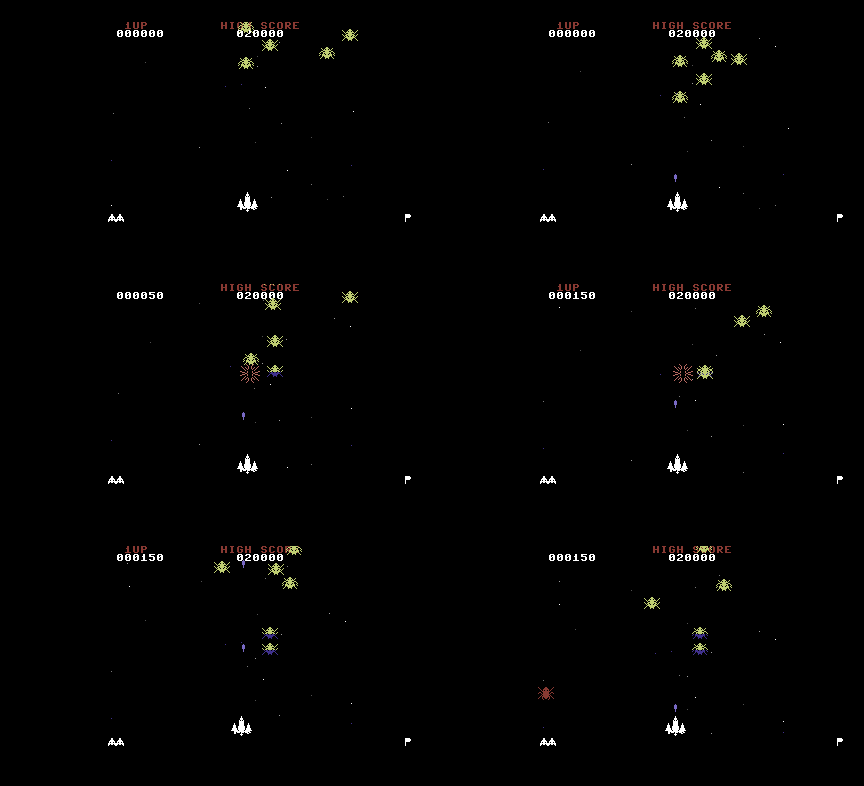
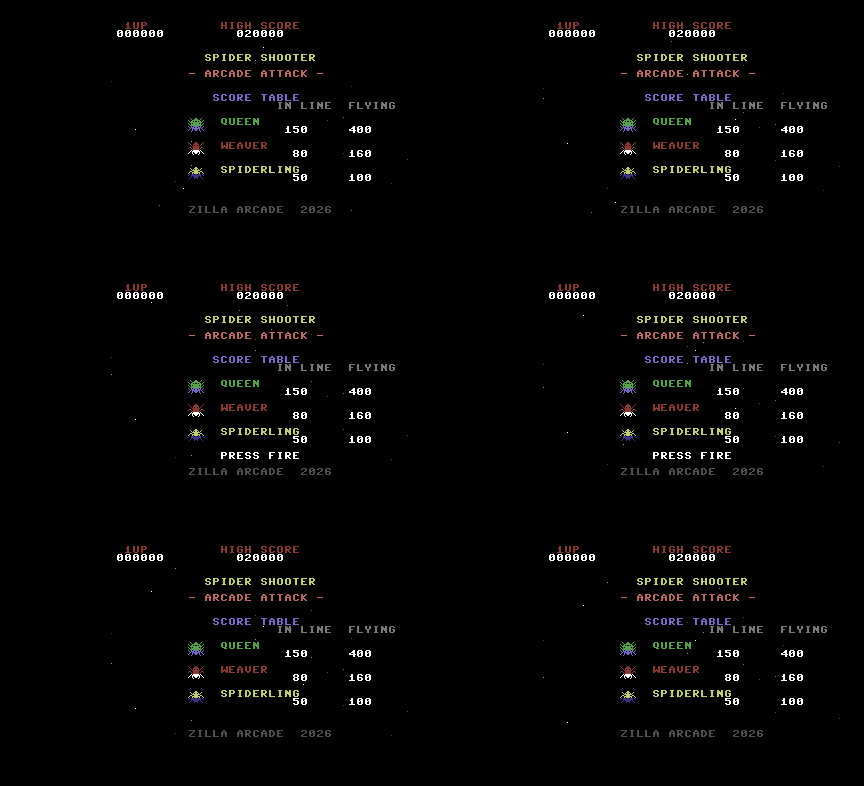
A Galaga-class arcade shooter for an unexpanded C64: sprite multiplexing, entry paths, formation breathing, diving attacks, challenging stages and a score table. Nineteen kilobytes of 6502 assembly, running on the real thing.
The interesting part is not that it works. It is how much did not, and how long the gap was between something that assembled and something that was a game.
The piece being written up now is about what happened when the code was written by a machine instead of by hand — where that helped, where it fell apart, and the objection that comes up every time it is mentioned: that building for these machines with modern tooling is not really building for them at all.
Producing something that compiles is the easy half. In one attempt three of ten modules assembled and none of it was playable. Getting to code is not getting to a game.
The purist objection deserves a real answer rather than a dismissal. The constraints are unchanged: the same 64K, the same sprite limits, the same machine refusing the same things.
The community’s scarcity has never been ideas. It is finished, playable, engaging games for machines whose audience is still here and still playing.
CommodoreNow now lives here. One site, not three — the Commodore material was never a separate subject, it was the same bench with a different machine on it.
Builds, restoration notes and the software. Spider Shooter above is a C64 game, and it will not be the last one here.
What changed when the Amiga arrived, and why writing for it shares almost nothing with writing for the 64 beyond the decade.
Three voices and a filter nobody has fully replicated. Worth its own writing, and it will get it.
Related work, run by the same person.
Software for arcade cabinets — lighting, control and the plumbing that makes a cabinet feel built rather than assembled.